I sobbed on my first date with my wife. This may sound extreme, but I am the kind of person who will turn into a puddle over a well-scored grocery store commercial. As we got to know one another, I explained that most of my art centers around a line from the Lord of the Rings series that hobbit Samwise Gamgee says at one of its darkest moments: “There is good in the world, Mr. Frodo, and it’s worth fighting for.”
That’s when my wife told me about a word I’d never heard before: “hopepunk.” I’d had no idea that there was a whole genre of works written by folks who had that same desperate optimism for the future that I did. My wife introduced me to one of those people: Jo Chiangexternal link, opens in a new tab (she/they), creator of the audio drama “Hearthbound: An Untelling of the Odysseyexternal link, opens in a new tab.Jo has worked for an international storytelling organization, runs her own production company called Stray Lungsexternal link, opens in a new tab, and has an incredible network of people who see her dreams and want to help make them a reality. She always has one project in the oven and one on the back burner.
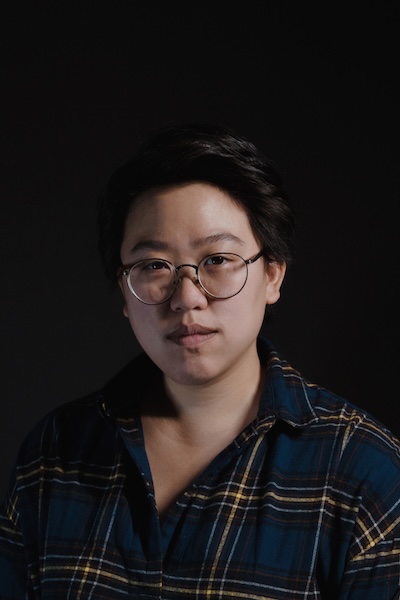
Two themes that come up in her work over and over again are the notions of community and the sense of “home.” As a child of Taiwanese immigrants, Jo tells me home—the central theme of Hearthbound—is complicated.
“I grew up in a world of tension. Tension of identity, of place, of gender, and of perpetually deciphering what was expected of me,” she says, explaining that as a child she lived “in Northern California, where people would constantly compliment my English, but then in high school, my family and I moved to China. There, as an American, I found myself an outsider in a different way.”
She felt even more like an outsider when she started to question her sexuality and queer identity. “I didn’t understand how I felt. When I started developing crushes, I couldn’t figure out whether it was because I wanted to be with them or just be like them.” In college, she met communities of out and proud queer people and began exploring her family’s idea of her versus what she finally knew to be true of herself.
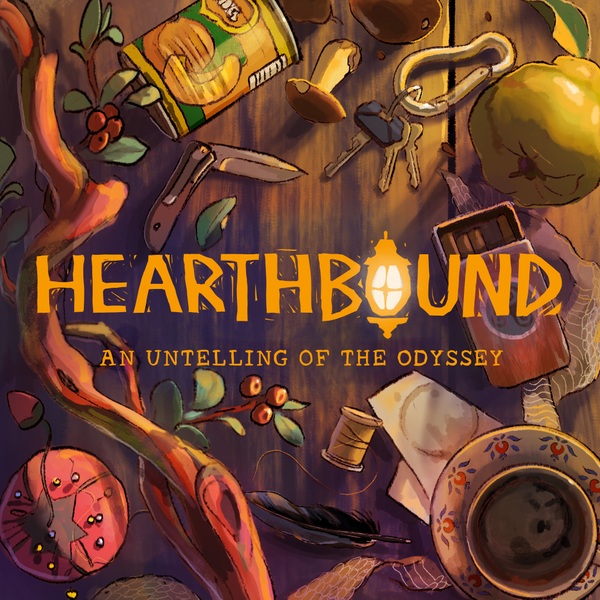
She takes on these experiences in Hearthbound, a retelling of The Odyssey, a famous ancient Greek poem believed to be written by Homer. The Odyssey (Jo’s favorite versionexternal link, opens in a new tab was translated by Emily Wilsonexternal link, opens in a new tab) follows the story of Odysseusexternal link, opens in a new tab on a treacherous journey back to his wife and home after the ten-year-long Trojan Warexternal link, opens in a new tab. It explores themes of wandering, homecoming, grief, and the rules of hospitality, especially in regard to travelers.
Jo transformed Odysseus into a queer woman named Odessa (voiced by Jo) separated by distance and time from her wife, Penelope, in “a 10-episode folk musical audio drama, set across a post-apocalyptic Great Basinexternal link, opens in a new tab. It’s a road trip, a queer love story, and a ballad for ecological restoration.” The audio drama format is a way to modernize the story while still honoring the roots of ancient Greek oral tradition. In the production, Jo grapples with the idea of home and what it looks like for people to heal from trauma.
“Western classics like The Iliadexternal link, opens in a new tab and The Odyssey are given such cultural power,” says Jo. “As a post-war story, The Odyssey is often considered a universal text, but only if that universality means echoing traditional western ideals. I asked myself: ‘How can I approach this text and its themes in a way that feels relevant to me?’ ‘How do I grapple with the tension between the powers of that western universality and the cultural margins I wanted to explore?’”
The Odyssey is set during a violent, chaotic time that might feel eerily familiar. “I wanted to ask, ‘How do communities survive? How can we look out for each other? After the world has ended, what do we do?’” One thing she brings up is the “Carrier Bag Theory of Fictionexternal link, opens in a new tab” by Ursula K. Le Guin,external link, opens in a new tab where Le Guin offers a look into a world where the person carrying a seed-bag (with the intention of setting down roots and endeavoring to grow something for a community they intend to build) is treated with the kind of reverence and pride that we normally reserve for warriors and their spears.
“The world is so noisy around us now. In a time of constant crisis,” Jo told me, “I wanted to see what it would mean to tell a slow story? Where we could take the moment to ask, ‘Who is around us?’ and ‘What can we do?’ We have so many stories of one person saving the world, but perhaps saving the world can look like all of us doing what we can with the people we can. History loves to mythologize heroes, but oftentimes good people are quiet and the good they do is quiet and kind.”
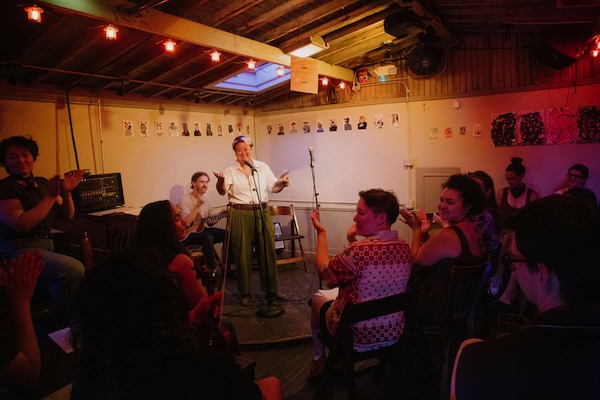
What would the ancient host/guest theme of xeniaexternal link, opens in a new tab look like after an apocalypse? How would the concept of hospitality change with the scarcity of the Hearthbound world?
“You can learn a lot about yourself by helping others. In the United States, where individualism often overshadows collectivist impulses, I wonder what it looks like to move past how I feel versus in service of understanding how I can better move through the world. Feelings are fine, but at the end of the line, it is what you do.”
Jo’s untelling of the Odyssey includes a very stark depiction of differing types of grief. Odessa travels aimlessly through the valley for years, searching for anything that will fill the hole of grief and anxiety that she carries in her heart. She meets survivor after survivor and although they offer her sanctuary and safety in their camps, she never feels secure enough to stay. Penelope, however, takes the bereft community she is in and builds something sturdy and successful that will long outlive her. Neither experience of grief is better or worse than the other, simply how each person reacts to the stressors of war, loss, and displacement.
At the end of every episode, Jo talks about the real land that this fictional story takes place on and the Indigenous cultures to whom that land originally belonged. Throughout American and world history, Indigenous cultures have been consistently and continually displaced and much of their histories and rights have been washed away, even though the communities are alive and vibrant to this very day. If entire communities and cultures can have their worlds turned upside down by outside forces, what are individuals meant to do in the face of it?
Considering the Odyssey is about war and displacement, I asked her about young folks experiencing this same struggle in 2025. How can teenagers—or people in general—find that solid grounding of home when their countries are violently shattered by war? If one cannot find home in the ground under their feet, what do they look for? When children are raised in houses, villages, or towns for their whole lives only for that sanctuary to be suddenly stolen from them by international governments’ disputes, natural disaster, or poverty— how can they ever feel safe enough to call anything home?
“Home doesn’t have to be static. And what’s more is that home can be remade over and over again. And though it may look different and change again and again, that doesn’t mean that the homes in your memories, the homes of your past, are ever meaningless.”
This notion particularly spoke to me as a child of divorce. My childhood shuffled between my warring parents and a handful of buildings, towns, and communities. My immediate family experienced extreme poverty for most of my adolescence and teenage years. I grew up in an affluent country, so even my poverty came with privileges others do not have, but still, sometimes, “home” was a couch at a grandparents’ house because we didn’t have a roof of our own.
Eventually, my mother saved enough money to purchase a little manufactured home and this became our safe space throughout my middle and high school years. When I had just barely become an adult, this home was suddenly repossessed. Manufactured homes like those we lived in are treated as vehicles in my home state, a reminder that the law devalues the types of homes people in poverty are most likely to be able to afford. Unlike a foreclosure, which takes time and a long legal practice, repossession is forcible and rapid. The four walls I had known as my sanctuary were suddenly carted away.
Although it did and still does hurt, I ask you to consider: Does losing a piece of property erase all the good times we had at that home? Were the moments of love and happiness that we shared there meaningless because I can no longer walk the same halls I did as a teen?
I like this idea that home is malleable, changeable, adaptable. Maybe your blood relatives don’t accept certain aspects of you, be it your sexuality, your gender identity, or religion (or lack thereof) and you find solace in a chosen family of friends. If that group changes or grows apart, that does not mean that the relationships you built within it or the love that was shared there was ever foolish or wasted.
As we live (both individually and communally), we adapt. We move around from town to town, building and leaving communities over and over. Jo thinks about this idea of sanctuary’s ability to grow and change with us: “We search for our center, something to ground us. Sometimes it’s your favorite food, or the neighborhood store you grew up with. Sometimes it is a tree in a park you watch change with the seasons year after year. It can be whatever you need it to be: places, people, feelings…And when some of those things disappear, I want to give grace to despair. Grief is okay.”
A portion of Hearthbound that really struck me was when Odessa met Paulie and Uri, who play music for anyone who happens to pick up their radio signal. Their form of activism in a world of isolation is to offer human connection, however fleeting, and to genuinely care for those who pass their way. In contrast, the incredibly feisty character Calypso remains stuck in her hurt, forever waiting for her loved ones to return. She only experiences personal growth when she untethers herself from her past and moves forward. You can choose to build your hope in your roots or your wings. Neither is better or more heroic than the other, only that you must build the hope.
“Hope isn’t what you feel, it is what you do,” says Jo. “And if hope is what you do, then joy is what feeds you in the doing.”
In fact, I think that Caitlin Seida said it best in her poem “Hope Is Not a Bird, Emily, It Is a Sewer Ratexternal link, opens in a new tab.” Here’s an excerpt:
Hope is an ugly thing
With teeth and claws and
Patchy fur that’s seen some shit.
It’s what thrives in the discards
And survives in the ugliest parts of our world,
Able to find a way to go on
When nothing else can even find a way in.It’s the gritty, nasty little carrier of such
diseases as
optimism, persistence,
Perseverance and joy,
Transmissible as it drags its tail across
your path
and
bites you in the ass.
The journey of life is long, confusing, frightening, and oftentimes incredibly lonely. Whether you, like Odessa, are struggling to find your way through, or like Penelope, are determined to build your home from the metaphorical floorboards up, there is a future out there for you. It may be that, like Calypso, you have to dig yourself out of patterns that no longer serve you to find a new life that will. Maybe you will go through your life like Paulie and Uri, offering gentle kindnesses and cozy care to friends and strangers alike. And perhaps you will adopt a dog named Mack and sing my personal favorite song of Odessa’s in the very first episode, Telemachusexternal link, opens in a new tab:
“Hey, friend of mine / I’m just glad to have you by my side / Your heart is heavy / Your feet are wearing you down / You were alone, but look how that’s come around / Guess that means we’ve fight left to be found / Everything’s gonna be alright.”
Roads go ever, ever on, and you will find your way home one day.